Authored Books
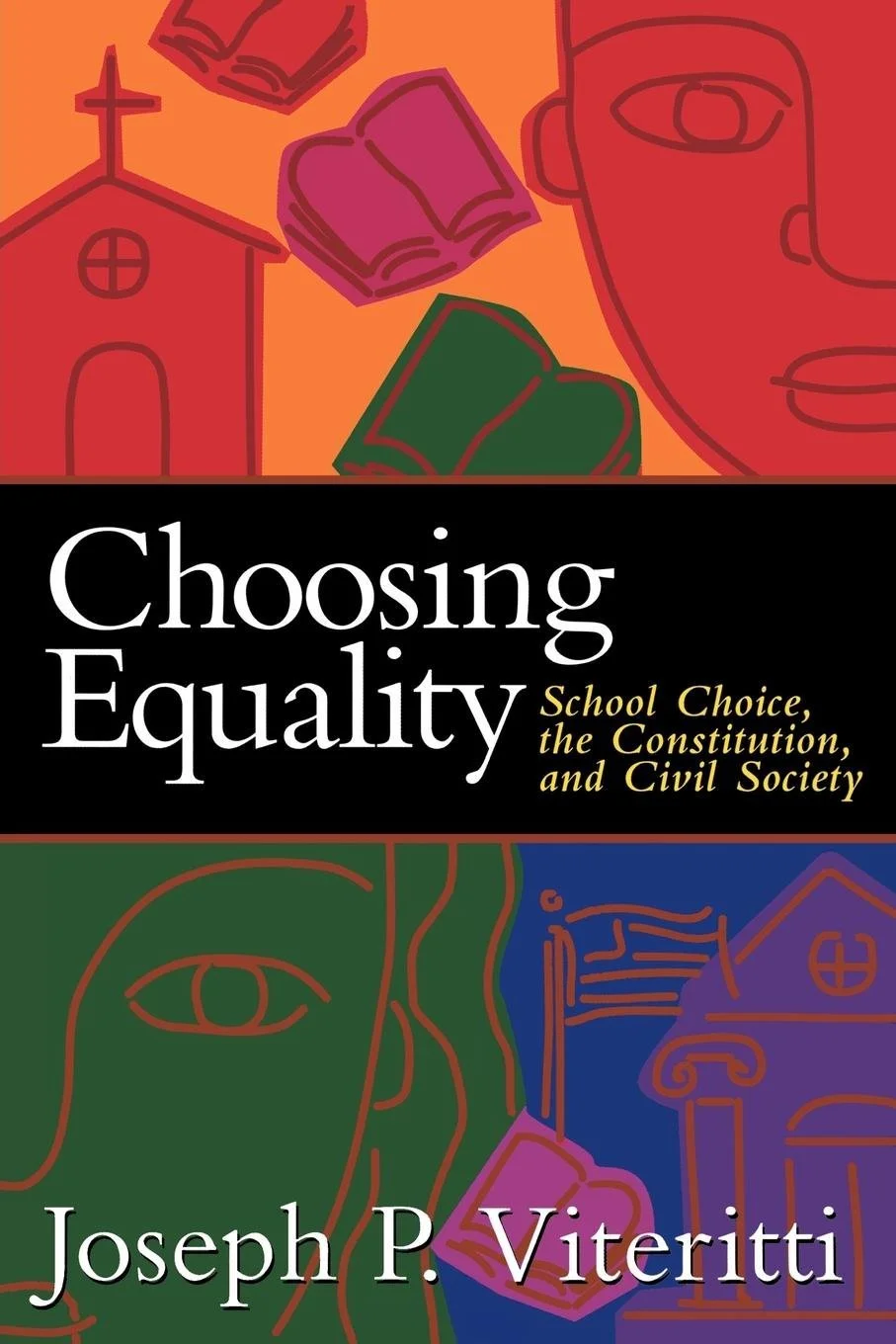
America is now in the second generation of debate on school choice. The first was prompted by the provocative voucher proposal conceived by Milton Friedman in 1955 and brought into the mainstream by Chubb and Moe's seminal book Politics, Markets, and American Schools (Brookings, 1990). It introduced a pure market model in which schools would be publicly financed but privately operated. While opponents continue to contend that choice will lead to the demise of public education, the weakening of civil society, and the fostering of separate and unequal systems of education, Joseph P. Viteritti argues that these long-held assertions must give way to present realities. The rich and diverse experience we have had with magnet schools, controlled choice, inter-district choice, charter schools, privately funded vouchers, and public vouchers in Milwaukee and Cleveland provides a solid basis for crafting a choice policy that enhances the educational opportunities of children whose needs are not being met by the present system of public education. Drawing on his background as a political scientist, legal scholar, and education practitioner, Viteritti starts his book with the promise articulated in the landmark Brown decision of 1954. After reviewing a variety of policy initiatives enacted to promote educational opportunity, he finds that the nation has fallen short of providing decent schooling for its most disadvantaged children, and in so doing has delayed the movement toward social and political equality. Viteritti does not contend that choice in the form of charter schools or vouchers for the poor is a solution to racial inequality, but he believes that these forms of choice can move the country in the proper direction. He insists that the nation cannot pretend to have a serious commitment to the goal of educational equality as long as choice is available only to those with the private means to afford it.
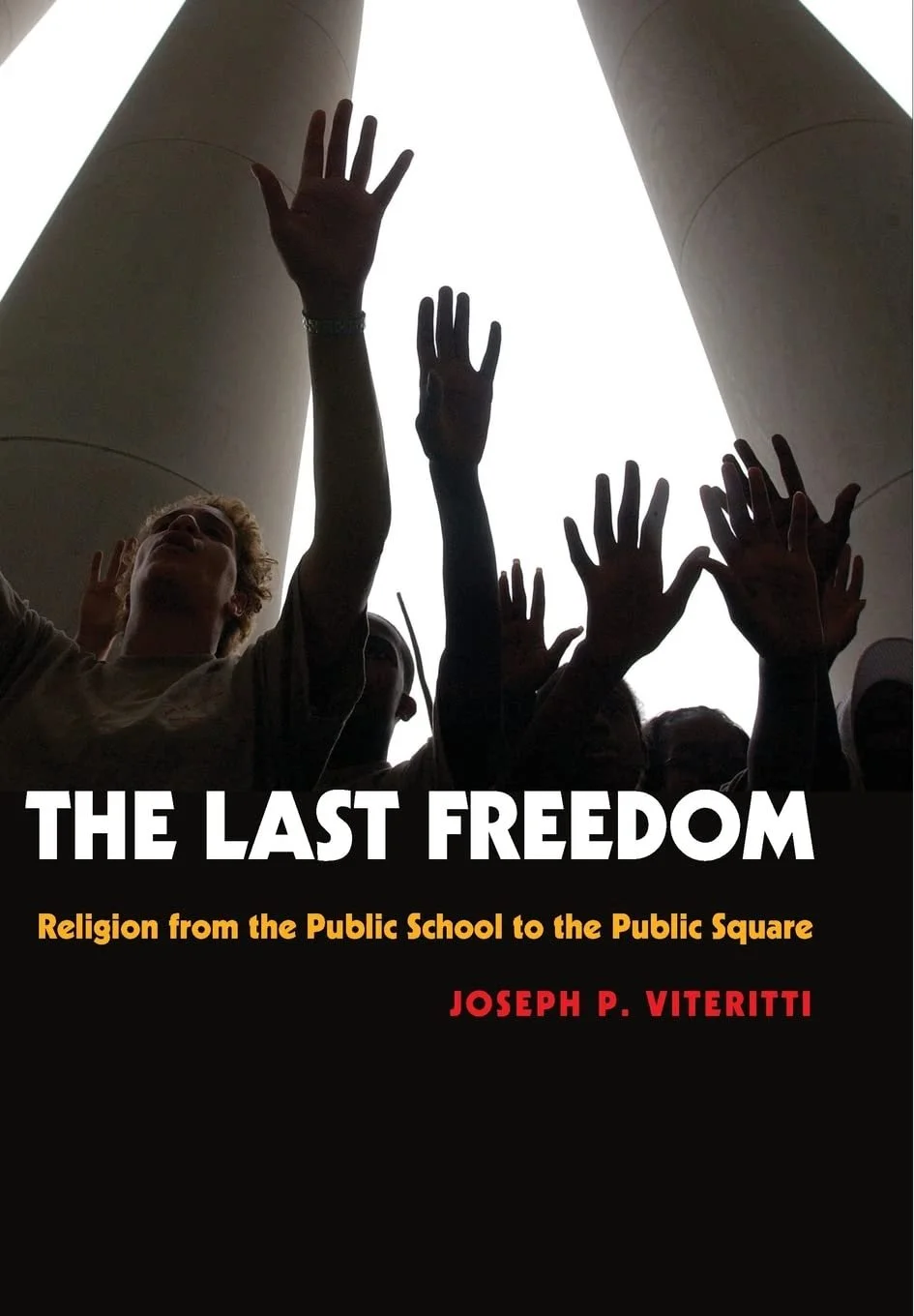
The presidency of George W. Bush has polarized the church-state debate as never before. The Far Right has been emboldened to use religion to govern, while the Far Left has redoubled its efforts to evict religion from public life entirely. Fewer people on the Right seem to respect the church-state separation, and fewer people on the Left seem to respect religion itself--still less its free exercise in any situation that is not absolutely private. In The Last Freedom, Joseph Viteritti argues that there is a basic tension between religion and democracy because religion often rejects compromise as a matter of principle while democracy requires compromise to thrive. In this readable, original, and provocative book, Viteritti argues that Americans must guard against debasing politics with either antireligious bigotry or religious zealotry. Drawing on politics, history, and law, he defines a new approach to the church-state question that protects the religious and the secular alike.
Challenging much conventional opinion, Viteritti argues that the courts have failed to adequately protect religious minorities, that the rights of the religious are under greater threat than those of the secular, and that democracy exacts greater compromises and sacrifices from the religious than it does from the secular. He takes up a wide range of controversies, including the pledge of allegiance, school prayer, school vouchers, evolution, abortion, stem-cell research, gay marriage, and religious displays on public property.
A fresh and surprising approach to the church-state question, The Last Freedom is squarely aimed at the wide center of the public that is frustrated with the extremes of both the Left and the Right.
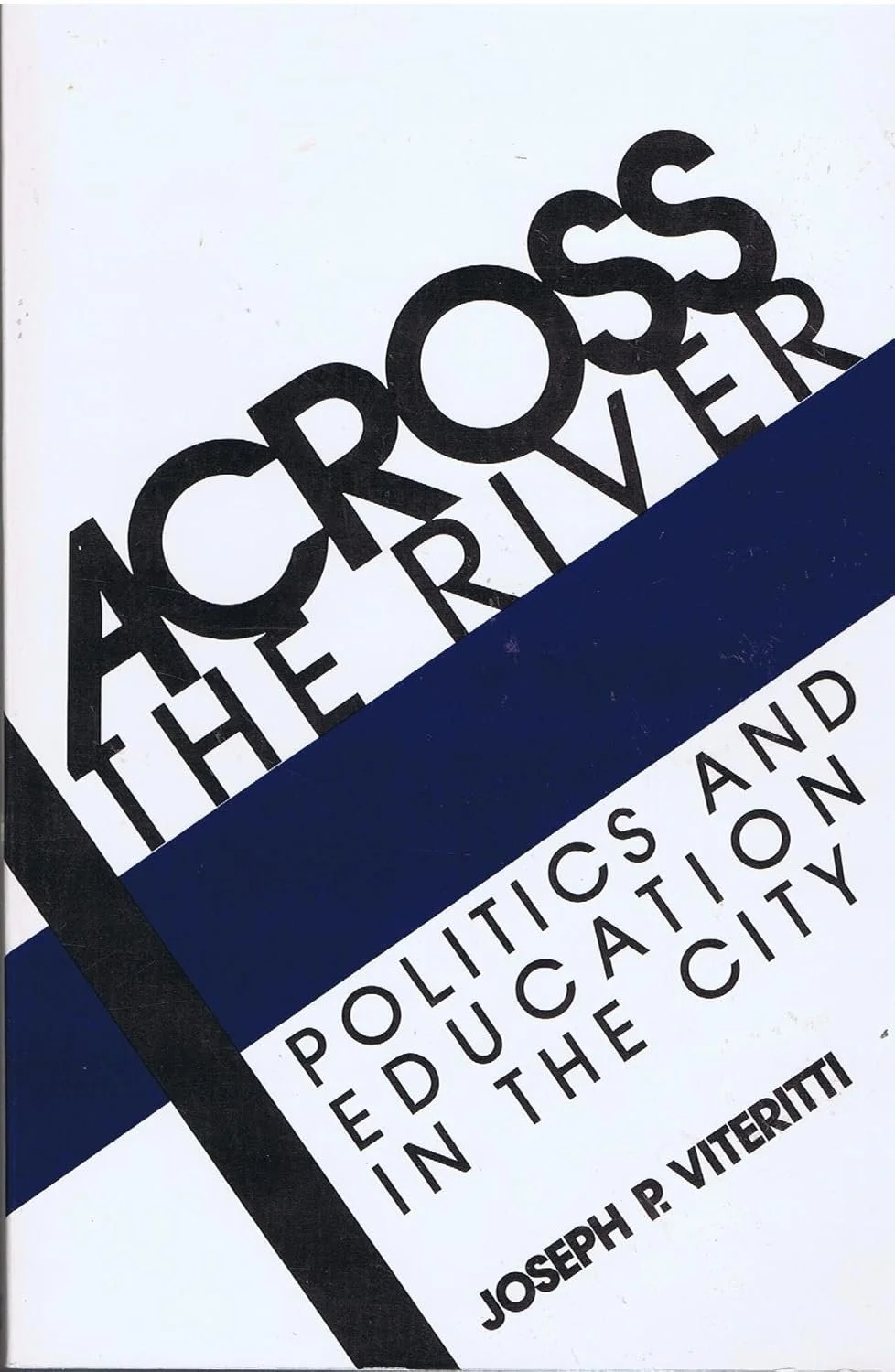
Excerpt from The New York Times, 1/22/84
Joseph P. Viteritti, in his newly published book, ''Across the River: Politics and Education in the City,'' describes how the board scuttled a plan by Frank Macchiarola, Mr. Alvarado's predecessor, to give students a choice of spending their ninth year in junior high school or moving on to high school. The board, Mr. Viteritti says, acted under pressure from special interests, including several borough presidents. The junior high school establishment sought to hold onto students and, thus, teaching jobs, while many parents preferred sending their children to high school sooner. More was at stake than the immediate issue, says Mr. Viteritti: ''It was a way of saying that the board and not the chancellor would run the educational affairs of the city during the coming year.'' Mr. Macchiarola, for whom Mr. Viteritti had worked as special assistant for four years, resigned about a month later. James F. Regan, the board president, rejects any suggestion that the conflict was responsible for Mr. Macchiarola's resignation and defends the board's action. ''We were listening to our constituents,'' he said. But in general, Mr. Viteritti says, even under a strong chancellor, ''a good deal of staff time was spent appeasing and responding to the pet concerns of the seven individuals who inhabit the eleventh floor at Livingston Street,'' the board's headquarters. School boards generally are either elected (as in 95 percent of the nation's school districts) or appointed by a single authority, usually the mayor. In New York, two members are appointed by the mayor, while the remaining five are picked by the borough presidents. Supporters of the system hail it as a safeguard of local representation; opponents decry it as parochialism, at best, and an abdication to urban politics.
Edited Books
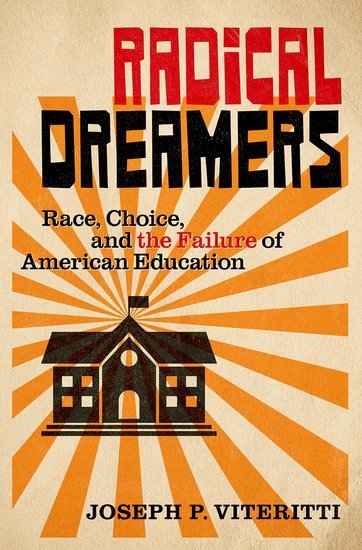
In immersive and authoritative history of the school choice movement--from its idealistic roots among Black activists to the costly unaccountable programs of today.
Seventy years after Brown v. Board of Education and demands to desegregate public schools, race and class remain the most reliable predictors of educational achievement in America. In attempting to address this divide, many school reformers have championed school choice: solutions like charter schools, vouchers, and other innovations designed to build more options into the system. Today, at least thirty-five states have laws that enable parents to send their children to private and religious schools at public expense while forty-six states have legalized charter schools.
In Radical Dreamers, Joseph P. Viteritti tells the definitive history of the school choice movement. In the 1990s, school choice emerged as an effort by a coalition of Black activists and conservative lawmakers seeking to offer economically disadvantaged students of color a way out of failing schools. As Viteritti shows, however, today's movement--championed by Republicans, conservatives, and faith-based organizations--has become less about placing disadvantaged children in better schools and more about providing public funding to students, irrespective of income, attending private--and frequently religious--schools.
Viteritti, an education insider and supporter of school choice for underserved students, profiles six influential figures, the "radical dreamers," who were integral to understanding the movement for greater education equality and the role that choice can play in fully realizing the movement's potential. Radical Dreamers urges us to have an honest conversation about education in America and where we have gone wrong. Viteritti's compelling narrative of how some of the most passionate educators conceived of school choice provides a valuable context to our nation's long struggle to offer every child in America a good education, and how that goal was undermined by advocates on both the left and right.